
Healthcare Acquisition
How a 40% Lower-Cost Outbound Strategy Outperformed a Digital Program
UMR, previously known as Avidyn
-
44 senior healthcare decision-maker appointments secured in 10 weeks
27 enterprise-qualified prospects advanced into the active pipeline
Outperformed prior digital acquisition program
Built a repeatable outbound acquisition model
-
After investing approximately $120,000 in a digital acquisition initiative that failed to produce meaningful enterprise engagement, leadership faced a capital allocation problem.
The program generated activity but did not provide qualified access to senior healthcare decision-makers. Executive traction was limited, acquisition cost was uncertain, and pipeline impact was insufficient to justify continued investment.
Leadership required a disciplined outbound strategy capable of reaching senior healthcare decision-maker prospects directly — with controlled budget exposure and measurable pipeline outcomes.
-
Rather than continue allocating capital to broad digital acquisition tactics, the program was restructured around direct, targeted outbound engagement with senior healthcare decision-makers.
The strategy emphasized disciplined prospect segmentation, executive-level positioning, and controlled budget deployment. Every element of the approach was designed to secure qualified appointments while maintaining strict oversight of acquisition cost and pipeline quality.
The objective was not activity — it was measurable access to senior healthcare decision-makers and accountable capital performance.
-
The engagement focused on highly targeted outreach to senior human resources and healthcare executives within defined enterprise accounts.
The program incorporated carefully segmented prospect lists, executive-calibrated messaging, and a structured outbound contact sequence designed to secure qualified appointments rather than generate unfiltered inquiries.
Follow-up discipline and performance monitoring ensured that each interaction advanced toward verified senior healthcare decision-makers. Budget allocation remained tightly managed to preserve acquisition efficiency while maximizing pipeline credibility.
-
Within 10 weeks, the program secured 44 senior healthcare decision-maker appointments. Of those meetings, 27 met enterprise qualification standards and were advanced into the active sales pipeline.
The initiative outperformed the prior $120,000 digital acquisition effort while operating within a lower total budget allocation. Executive-level access increased materially, and pipeline quality improved measurably.
The campaign produced validated decision-maker engagement rather than generalized lead volume — establishing a reliable, repeatable outbound acquisition framework.
-
This engagement showed that a disciplined, targeted outbound approach — focused on reaching senior decision-makers and managing budget carefully — can outperform higher-cost digital programs that do not deliver meaningful executive engagement.
-
Many organizations have shifted heavily toward digital channels, often abandoning proven lead-generation methods in the process.
When the goal is to win enterprise healthcare accounts — by reaching senior human resources and benefits decision-makers inside large organizations — broad digital tactics alone are rarely sufficient. The target universe is limited, specific, and difficult to penetrate through crowded online channels.
In this engagement, direct mail proved to be the most effective way to reach executive decision-makers. By delivering a focused, one-to-one message that cut through digital noise, the program secured qualified C-suite access within a controlled budget.
The lesson is straightforward: channel selection should follow targeting discipline — not trend momentum.

Tactical Implementation Flow Chart

B2B Healthcare Telemarketing Lead Generation Process
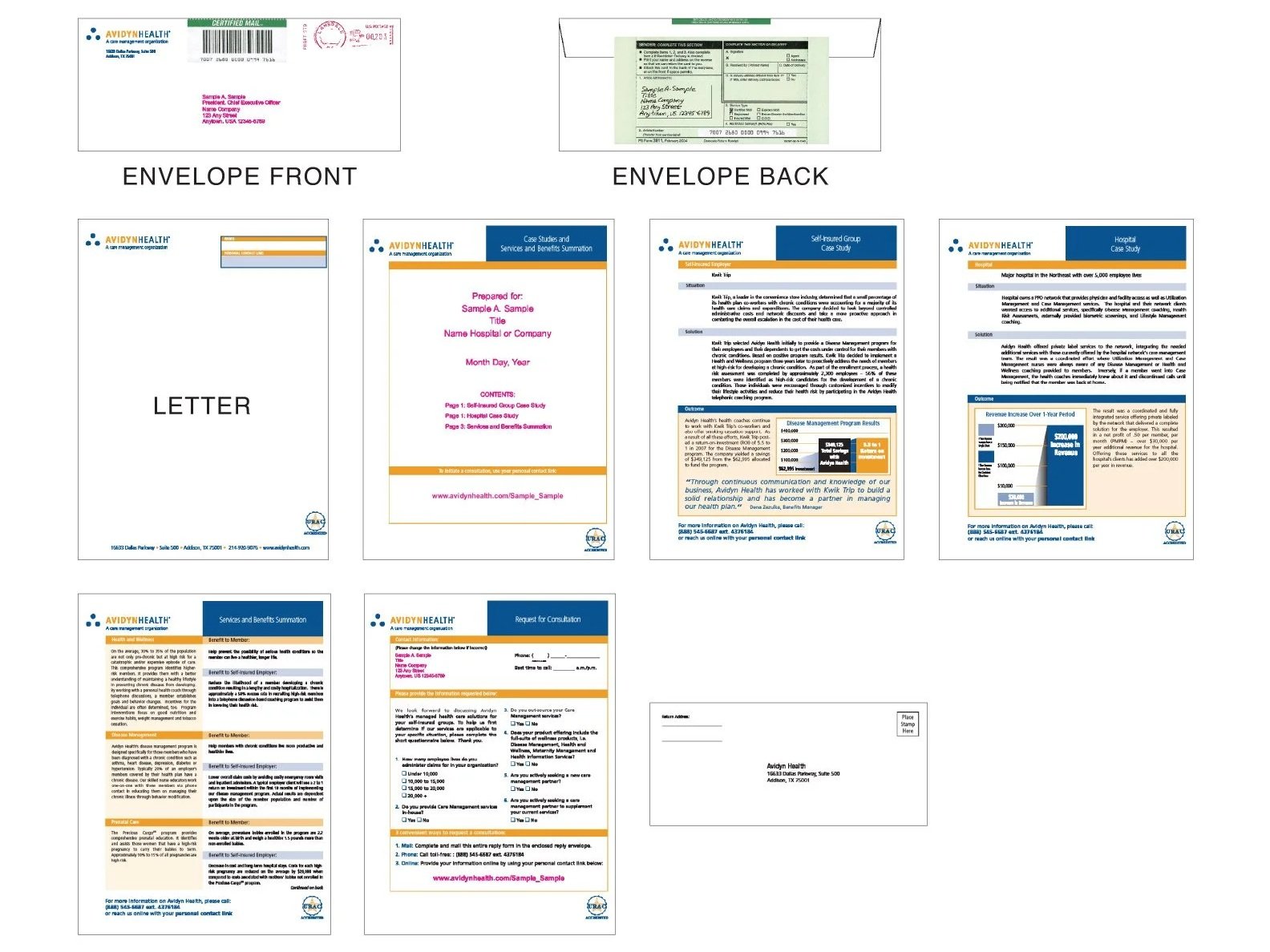
Direct Mail Lead Generation Sent Before Outbound Calls