
Insurance Acquisition Engagement
Generating Leads in a Hyper-Competitive Market While Lowering the Cost Per Inquiry
This was a lead-generation campaign, not a direct order insurance package. The objective was to generate stronger inquiries at a lower cost and identify a better control for downstream sales follow-up.

Blue Cross and Blue Shield of Texas
Blue Cross and Blue Shield of Texas had been using a self-mailer control for individual health insurance lead generation. To improve performance, I developed four challenger direct mail packages and tested them against the client’s existing control.
The objective was not to chase small creative changes. It was to run a meaningful direct response outcome test that could identify a stronger lead-generation control.
The Snap Pack beat the client’s self-mailer and outperformed the other challenger packages. Response increased by more than 30 percent, cost per inquiry dropped substantially, and the DMCG list portion of the test increased circulation by more than 40 percent.
Four Challenger Packages Tested Against the Client’s Control
This test compared the client’s existing self-mailer against four challenger lead-generation packages.
The Snap Pac emerged as the winning control.
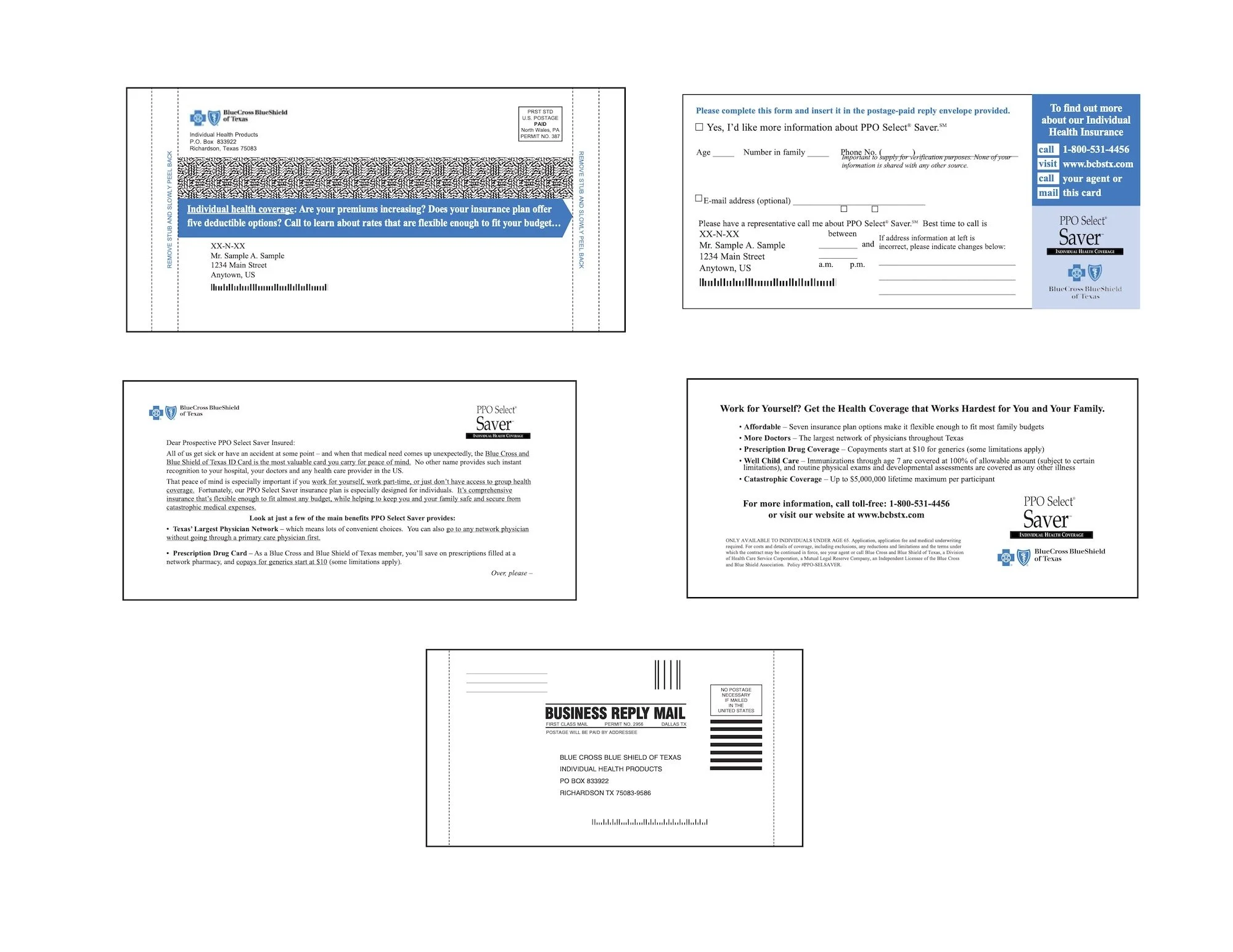
The Winning Control: The Snap Pac
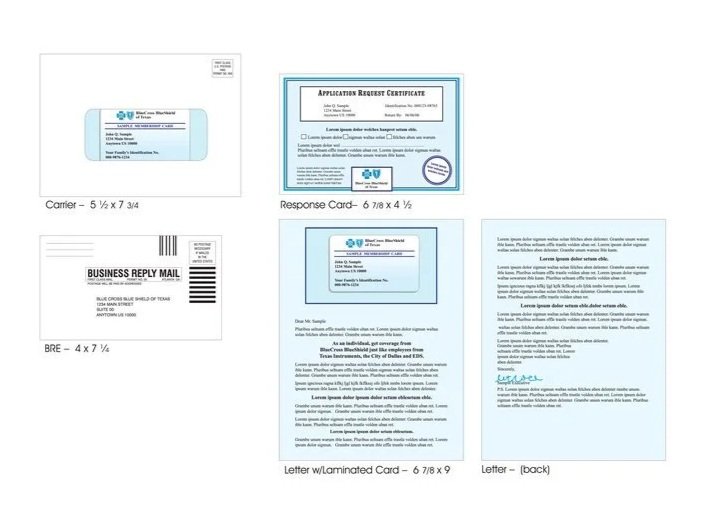
Invitation Test Package
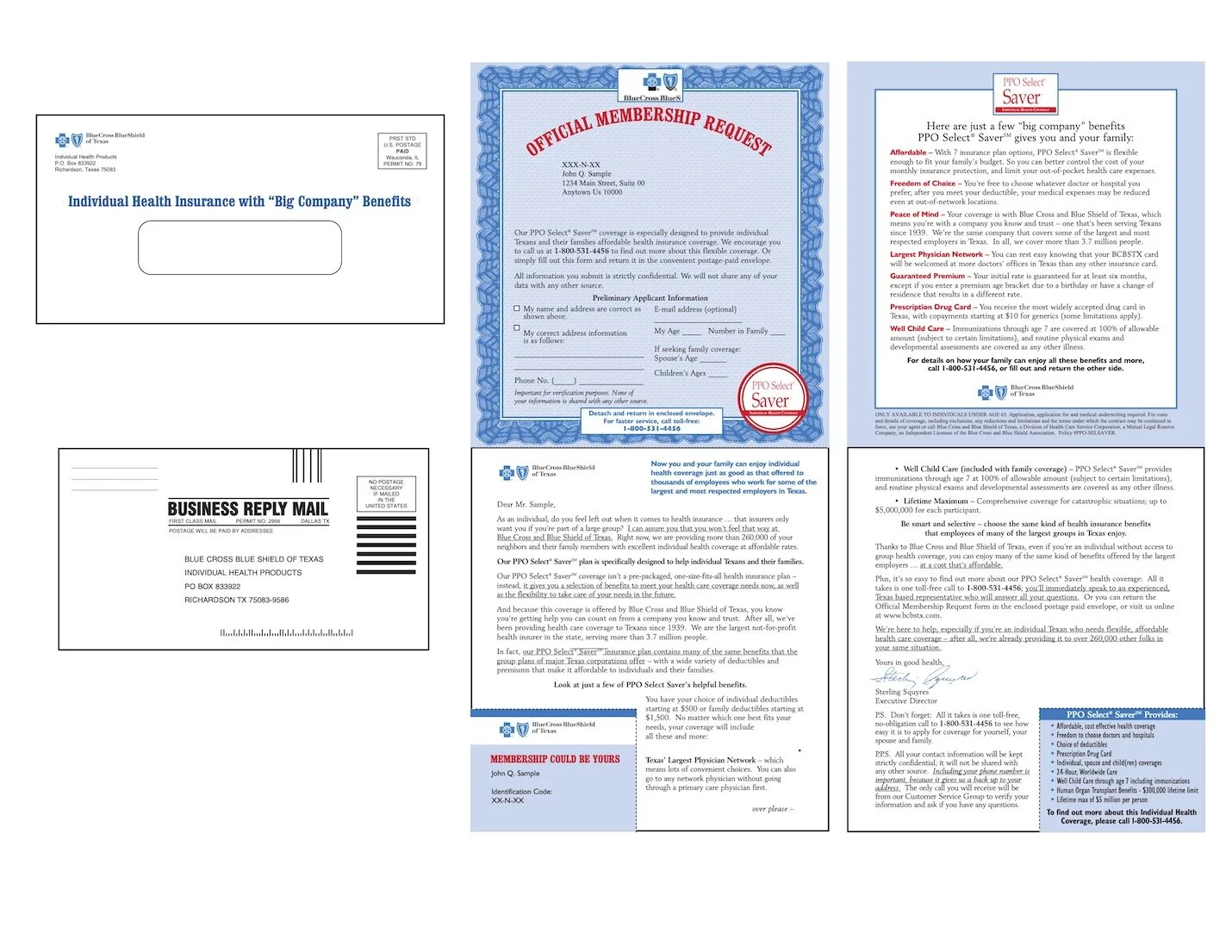
Monarch Membership Test Package
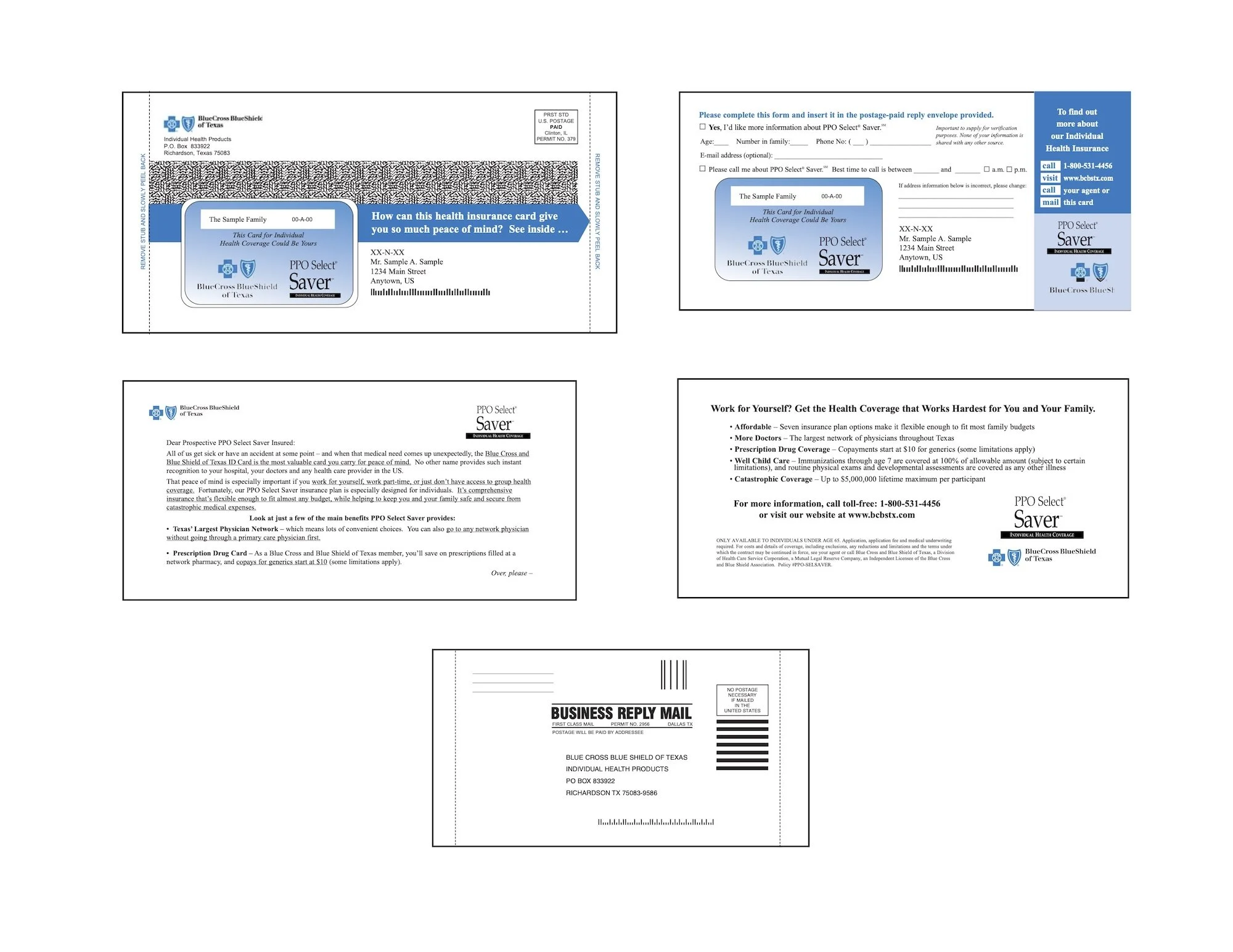
Carded Snap Pac Membership Test Package
Snap Pac Beats Self-Mailer Control
Control: Self Mailer
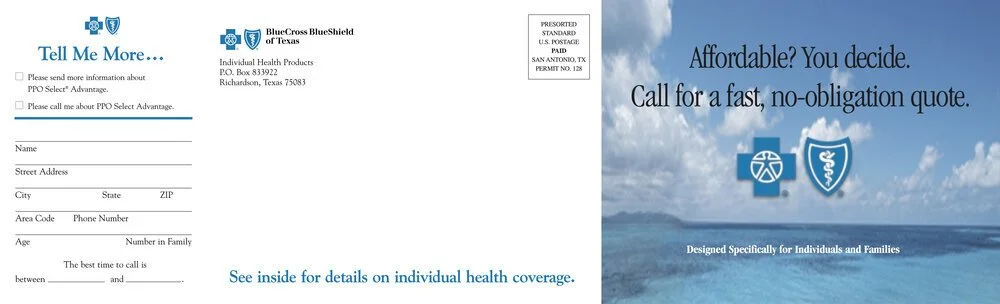
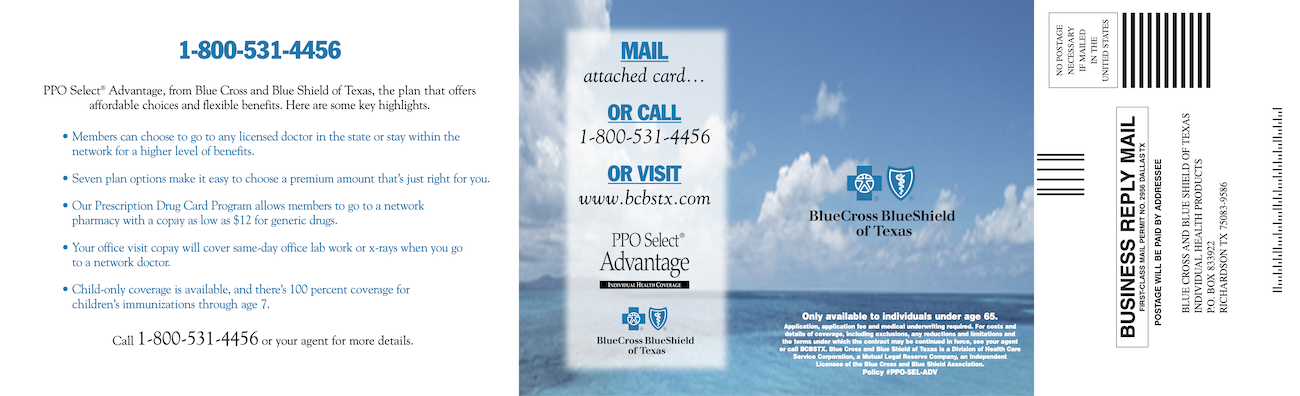
Winner: Snap Pac
What This Test Demonstrated
This engagement demonstrated how meaningful direct response testing should work in lead generation. The existing control was challenged by multiple serious packages, the winner was identified through outcome testing, and the weaker control was replaced.
It also reinforced a broader lesson: self-mailers and postcards often lose to stronger envelope-based formats when the goal is serious lead generation. In competitive insurance markets, format affects response behavior, inquiry economics, and downstream sales potential.
The point of testing is not to produce interesting data. The point is to establish a stronger control that improves acquisition performance.
Why Insurance Lead Generation Must Be Judged by Cost Per Sale
Cost per inquiry matters, but it is not enough. Insurance lead generation must be judged by downstream conversion and cost per sale, because only a percentage of inquiries will ultimately become paying policyholders.
That is why response gains must be interpreted within the economics of lead qualification, conversion, persistency, and lifetime value. The winning control should not only generate more inquiries. It should improve the likelihood of profitable sales.
In regulated insurance markets, marketing teams often calculate an allowable acquisition cost based on expected revenue, claims assumptions, and retention. That allowable becomes the financial boundary for what can be spent to generate and convert leads profitably.
That is what disciplined direct response testing is supposed to do: expose a weak control, identify the true winner, and replace the old package with one that improves acquisition economics.
Insurance Industry Direct Marketing Campaign
Evaluation Criteria
Most insurance companies evaluate their direct marketing efforts based on the conversion rates coming from their leads.
If you achieve a 1% response rate and convert 20% of those responses into sales, your conversion rate is 20%. That 20% is converted to a cost per sale.
Assuming your average premium is $ 1,000 per year and your average retention rate is three years, each sale generates $3,000 in revenue.
This is the calculation: Assuming a cost of $1,000 per thousand mailed with a response rate of 1%, you would generate ten leads. This comes to $1000 /10 or a $100 cost per lead.
A conversion rate of 20% yields ten leads, or 20% of ten, or two sales.
This equals two sales at $1000 or $500 per policy for the direct mail campaign.
This formula does not include extraneous costs such as commissions, claims, or administrative costs.
For a direct mail order marketing campaign, you might use an actuarially prepared cost per sale allowable, called the TMC (Total Annual Marketing Costs divided by annual revenue).
This formula provides the total marketing cost allowable for each product sold because there is no commission. The TMC takes into account all other expenses, such as administration and claims.