
Your Direct-Mail Package May Have Plenty of Benefits—and Still No Clear Reason to Respond
The strongest customer benefit may be buried. Or competing offers may prevent any one benefit from becoming the main selling proposition.
A direct-mail package can explain the product accurately, list numerous benefits and include a strong offer—yet still fail to give the prospect one clear reason to respond.
The problem is often not a lack of benefits. It is a lack of benefit hierarchy.
A package needs one main selling proposition: the most compelling customer outcome placed in command position. Other benefits can strengthen that proposition, provide proof and overcome objections. But they cannot all receive equal weight. Nor can several offers ask the prospect to make several different decisions at once.
This requires more than converting a product feature into a functional benefit. The copywriter must continue to the human result that makes the benefit personal. A professional credential is a feature of a program. Greater knowledge and demonstrated competence are functional benefits. Advancement, security, recognition or earning power may be the human outcomes that motivate the buyer. The correct motivation depends on the product, the target market and the alternatives the customer is considering.
Once that outcome is selected, the package needs a visible hierarchy. The opening should establish the principal value. The offer should make it easy to take the next step. Proof should make the promise believable. Secondary benefits should reinforce the decision—not compete to become separate selling propositions.
Two historical membership packages illustrate opposite versions of this problem. In one, the strongest benefit is buried. In the other, two offers and numerous supporting benefits compete for the same response.
When the strongest benefit is present—but buried
An American Legion reactivation control asked former members to pay $20 to restore their membership.
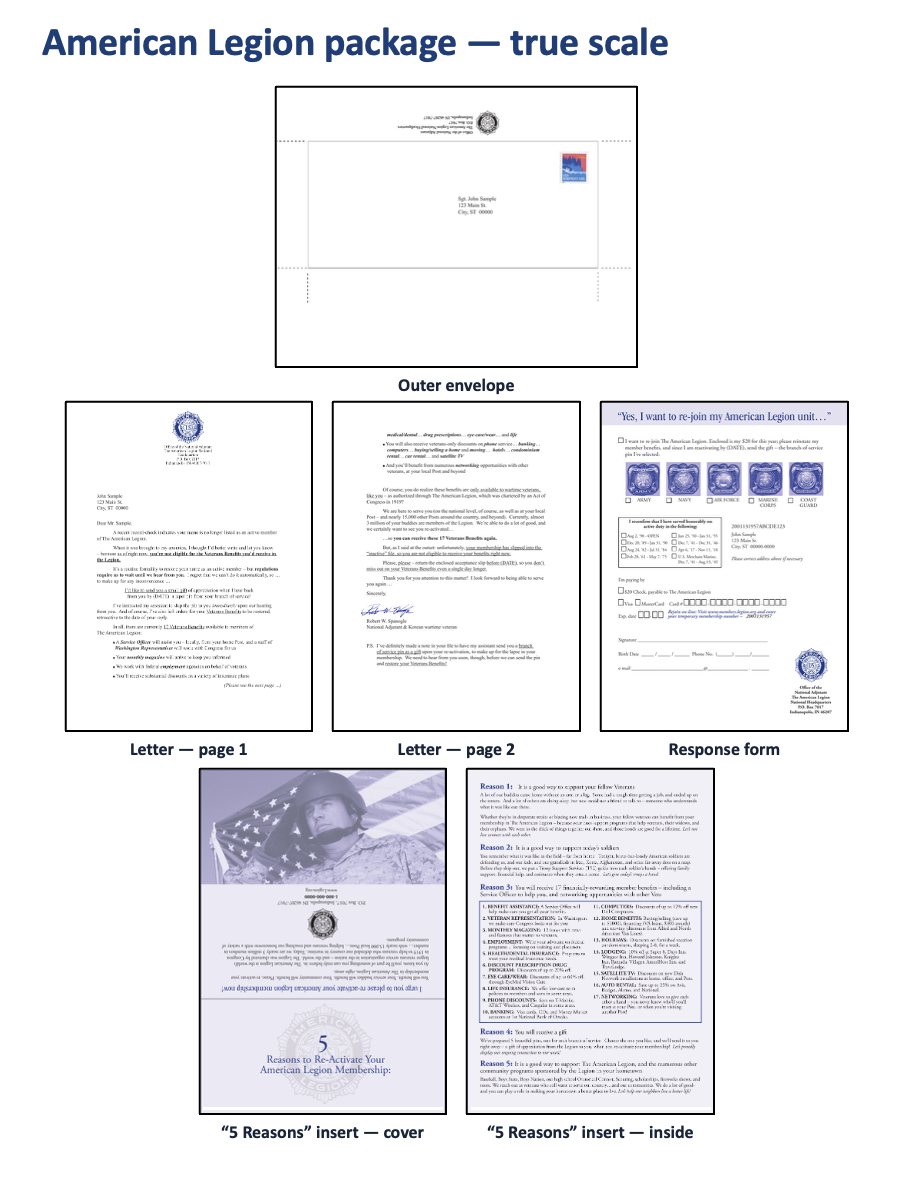
Figure 1. The complete American Legion reactivation package, shown before the detailed analysis.
Its letter opened to explain why the organization mailed the package. It does not answer the veteran’s more important question: Why should I spend $20 to reactivate?
The letter continues with inactive-status language, the restoration process and a branch-of-service pin offered as a response premium. Only later does it introduce the 17 personal membership benefits.
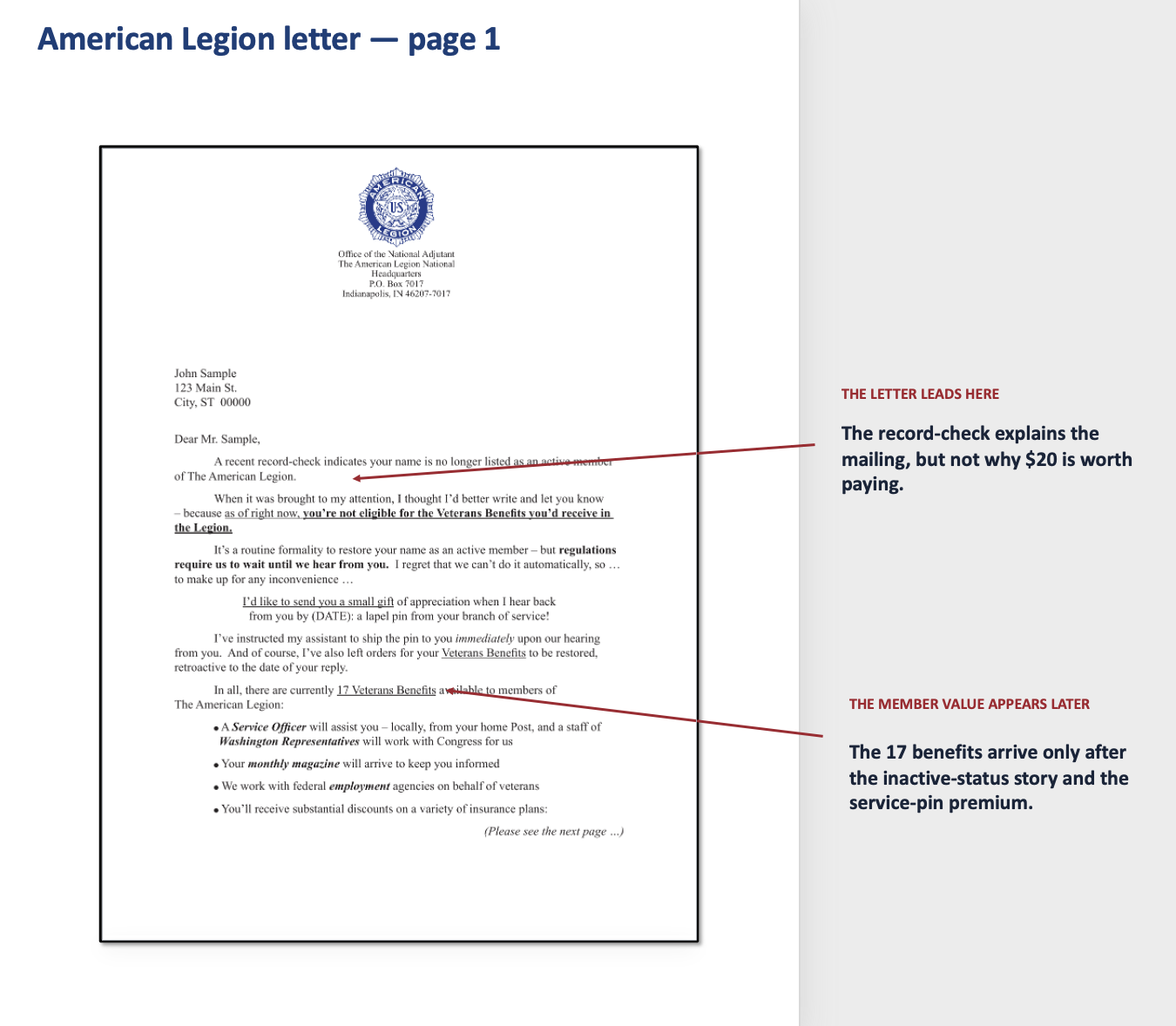
Figure 2. The letter opens with record status; the direct member value appears later.
Those benefits include the package’s strongest economic reasons for responding. The historical control cited prescription-drug discounts of up to 20%, eye-care and eyewear discounts of up to 60%, lodging discounts of 10%, auto-rental discounts of up to 25%, and other insurance, banking, travel and purchasing programs.
The practical proposition is simple: using even one applicable benefit could repay the $20 annual fee several times over. That is the immediate exchange the prospect needs to understand.
The “5 Reasons to Re-Activate” insert creates the same hierarchy problem. Reasons 1 and 2 ask the veteran to support fellow veterans and current service members. Reason 5 asks the member to support the Legion and its community programs. These are meaningful expressions of the organization’s mission, but they are variations of one institutional reason.
Reason 3 contains the 17 personal benefits. Reason 4 is the branch-of-service pin. The strongest personal value is therefore placed below two broad mission statements.
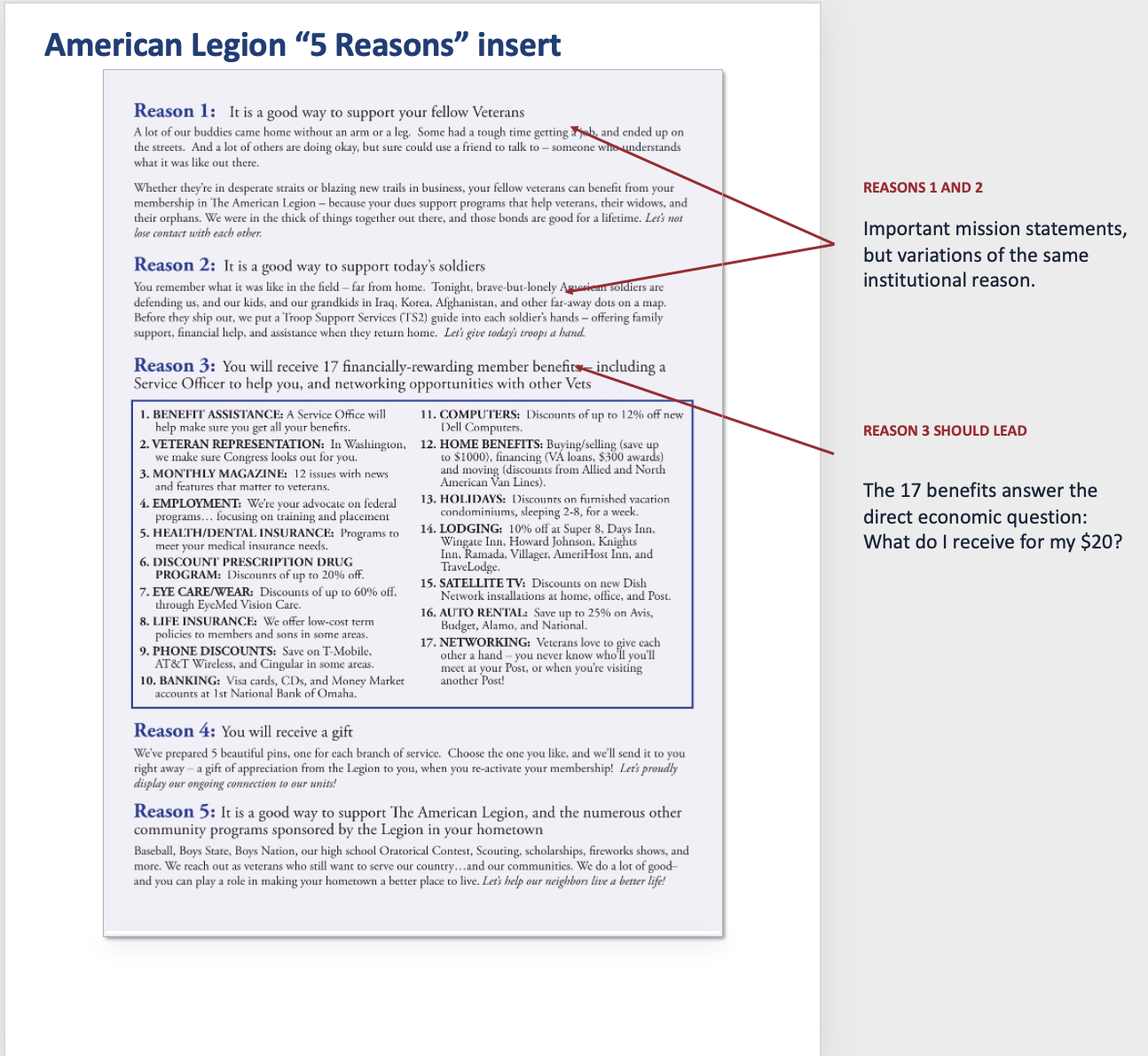
Figure 3. Broad mission reasons are placed ahead of the 17 personal membership benefits.
A more disciplined test would reduce five reasons to three:
Lead with the 17 personal benefits and the likelihood that they can more than repay the $20 fee.
Use the branch-of-service pin and a credible deadline as the reason to respond now.
Consolidate support for the warrior community into one important reinforcing reason.
This does not diminish the Legion’s mission. It gives the prospect a concrete reason to rejoin, then makes the larger mission more meaningful.
When too many offers require too many decisions
The American Purchasing Society membership package presents a different problem. Its target was an employed purchasing professional who needed certification as a career step. The package promised career advancement, professional knowledge, publications, research, consulting, forms, job matching and discounts on certification courses.
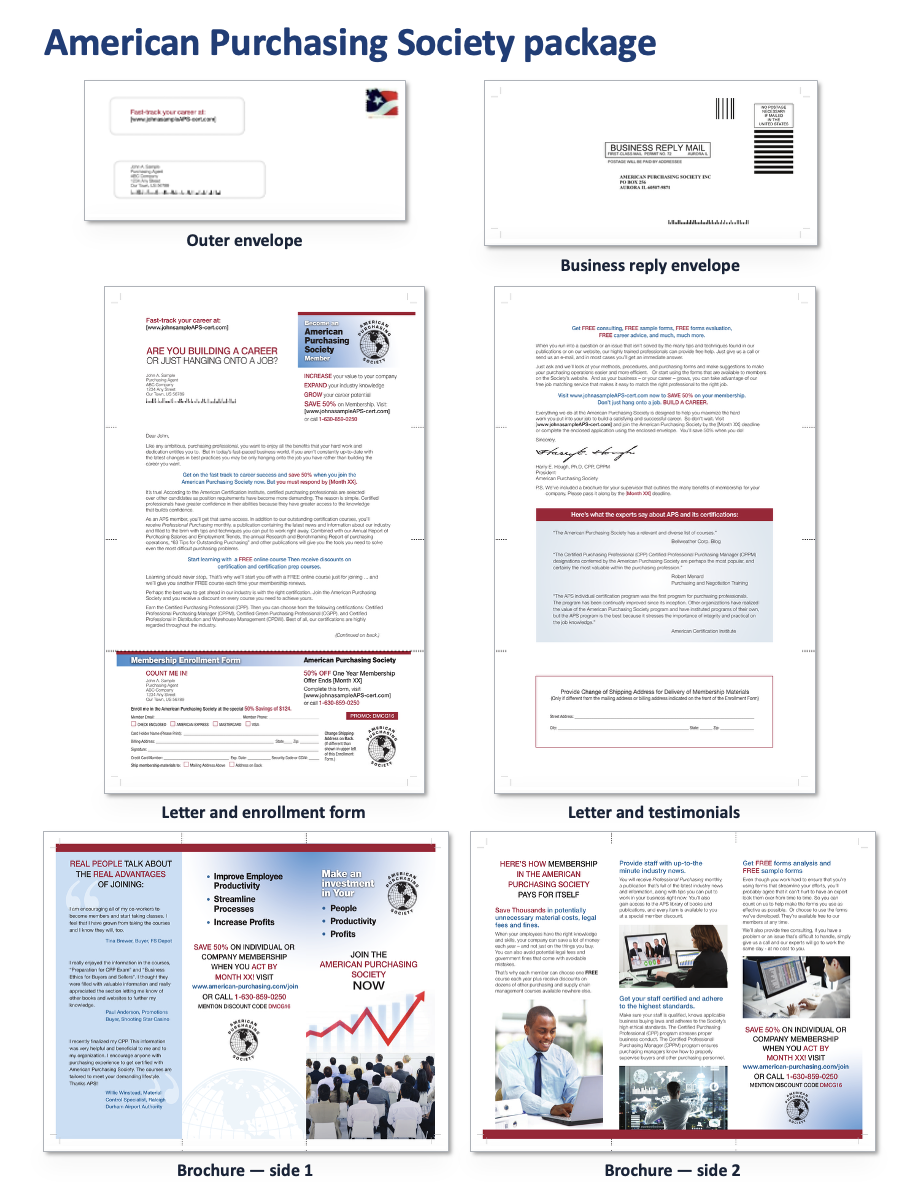
Figure 4. Complete American Purchasing Society membership package.
It also presented two offers:
Join the Society now and save 50% on membership.
Start learning with a free online course.
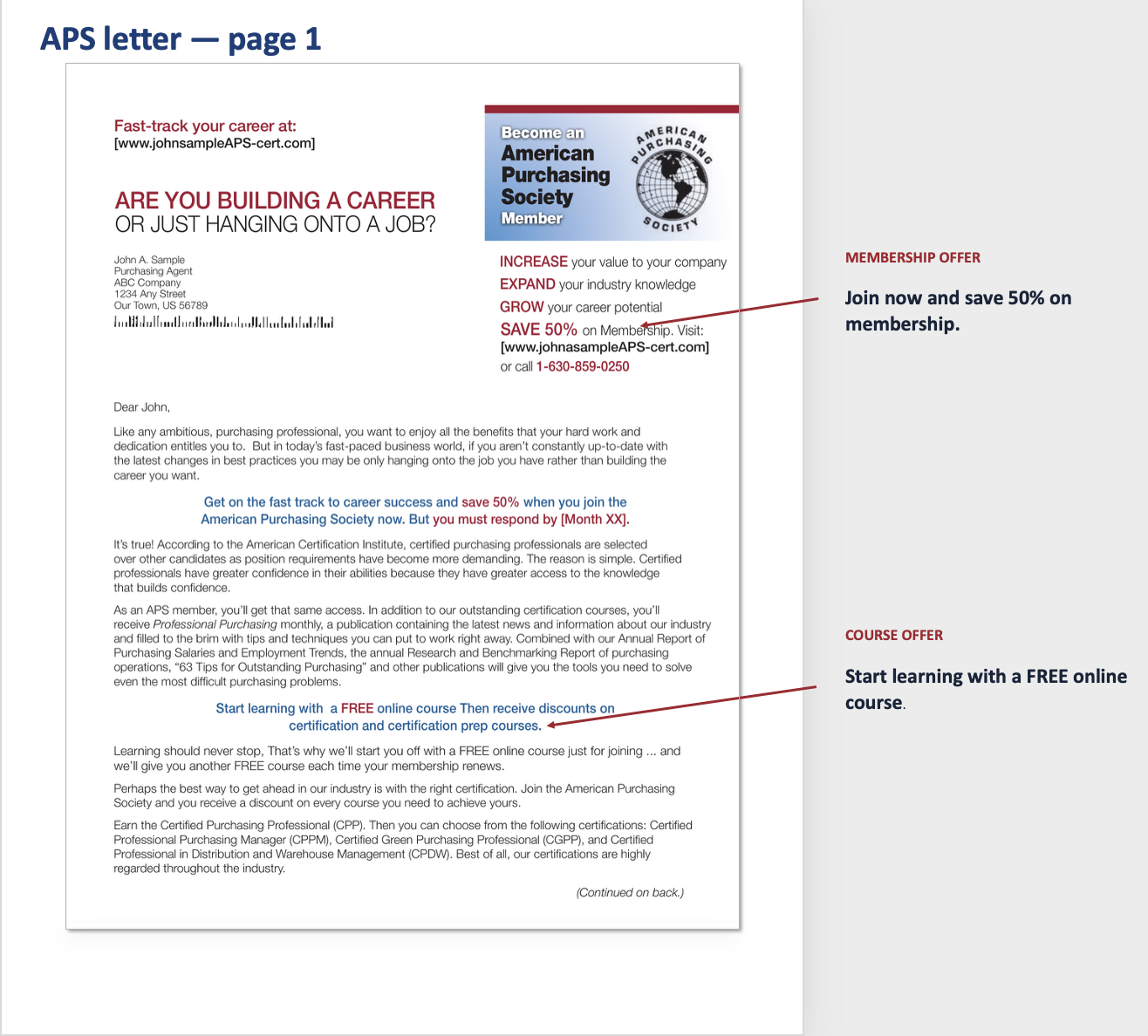
Figure 5. The membership discount and free course compete for the first response.
Both offers may be attractive. Together, they require the cold prospect to determine which decision comes first. Is the package selling membership? A free course? Certification? Or a complete career-development relationship?
The package explains so much that the reader must reconstruct the intended sales sequence. A prospect contacted out of the blue is unlikely to invest that effort.
The simpler approach would make the free course the first package’s only offer. But “free” is not the selling proposition by itself. The package should identify the course, explain what it teaches, show what the employee will be able to do afterward, state the time required and connect the lesson to the certification path.
The immediate decision becomes: Take the first useful step toward certification at no cost.
After the prospect enrolls, participates or completes the course, a follow-up package can offer membership at 50% off and explain how membership supports the next certification step. The prospect has now experienced the instruction, and APS no longer has to ask unsupported career promises to carry the entire sale.
The package reportedly failed with its target market. That result does not prove that the competing offers caused the failure; only a properly constructed test could establish that. But the package clearly demonstrates a strategic condition that merits testing: two offers asking for two decisions in one contact.
Audit the decision—not merely the copy
Before approving a direct-mail package, ask:
Can the prospect identify the primary offer within seconds?
Does the opening answer, “What is in this for me?”
Is one customer outcome visibly more important than every supporting benefit?
Do secondary benefits reinforce the main proposition—or introduce new decisions?
Is the response device selling the same proposition as the letter and insert?
Should the selling assignment be divided into a sequence of contacts?
A package can contain many benefits, but it cannot have several main selling propositions. The copywriter’s job is not merely to describe everything the product provides. It is to select the customer outcome most likely to motivate the target, put it in command position and make every other element help close that one decision.
One target. One main selling proposition. One immediate action.